Wednesday, June 10, 2015

Five things learned from the latest Ethiopian election

Uneventful
The 2015 edition of the Ethiopian general election — the fifth of its kind since the current rulers took command of state power — is happily over. The results were so predictable and inconsequential that a government leaning private weekly couldn’t hide the apparent. “No other national elections held over the past two decades have a result as obvious as the one held to day.” International media had long come out with similar views. The Economist’s latest issue incidentally carried a story about Ethiopia, there the elections were just a side note dubbed “uneventful…with a predetermined outcome.”
The curious case of the professor
But the hoopla surrounding the elections unwittingly showed the true colours of the entire system, some new and some tired. Head of the National Electoral Board of Ethiopia (NEBE) famously said
the ruling party doesn’t need the support of his institution to win an election, when some raised concern about the Board’s impartiality. Lately he has come out even more strongly, his combative edge getting the better of him. And those who casted doubt about the fairness of the polls should be “ashamed of themselves,” lashed out the former veterinary science professor over the weekend.
The new face of censorship
Censorship has scores of manifestations in the country. In its latest iteration electronics media were given a carte blanche to censor the contents of election campaign materials that representatives of contesting parties were supposed to air. While a number of candidates were eager not to miss their five minutes of fame on the national media, those who took the matter more seriously decided to quit the exercise all together.
The Interview
Probably one of the most memorable part of the election was the Prime Minister’s interview on the Al Jazeera network. The Premier sat down with the former BBC news anchor Martine Dennis. The event had some intense moments reminiscent of the BBC’s Hard Talk host Stephen Sackur’s face off with Hailemariam’s predecessor two elections ago. Asked whether he wields real power: “Even during PM Meles era and period this country has been deciding collectively in the system.” Seriously? Martine got on Hailemariam’s nerves when she called the judiciary an extension of the government.“This is an insult for an independent judiciary system of Ethiopia,” the PM retorted. In his attempt to paint a rosy picture of the administration, the clichés of “developmental democratic state” and the rhetoric of neoliberalism were in full abundance. Any criticism against the system is a conspiracy of “the neoliberal paradigm and prescription,” whatever that meant. It was also interesting to hear him talk about the Zone 9 bloggers who have been detained since April 2014 on terrorism charges. “My government has a clear evidence that they are connected with one of the terrorist groups I will not tell you now.” Heaven only knows how long will it take till the “clear evidence” makes it to the court.
Blame game

The ruling party’s complete sweep is creating discomfort within the party’s rank. Now they are in the business of damage control. Some of the party’s stalwarts are coming out in various media to bash the non existent opposition calling it fragmented and only showing up during election times. Having jailed and driving the better part of the opposition out of the country, TPLF/EPRDF has only itself to blame for the embarrassment of a 100 percent victory. “They who have put out the people's eyes reproach them of their blindness.” Hail to the Poet!

Friday, May 22, 2015

Is Ethiopia about to get more than one opposition MP?

  • 21 May 2015
  •  
  • From the sectionAfrica
A youth waves the ruling party Ethiopian Peoples Revolutionary Democratic Front (EPRDF) flag in front of a large crowd during an election rally by the EPRDF
The ruling Ethiopian Peoples Revolutionary Democratic Front (EPRDF) is likely to win Sunday's elections

Is Ethiopia about to get more than one opposition MP?

The current parliament in Ethiopia has only one opposition representative. Could this all change when up to 36 million voters head for the polls this Sunday?
These will be the first elections since the death of the long-term Prime Minister Meles Zenawi in 2012. His Ethiopian People's Revolutionary Democratic Front (EPRDF) has been in power for almost a quarter of a century, and faces no reasonable prospect of defeat.
People take part in an Ethiopian People's Revolutionary Democratic Front (EPRDF) election rally in Addis Ababa
The ruling EPRDF has been in power for a quarter of a century

Who is participating in the polls?

There are 57 political groups which have registered for the election. Many of them are organised along ethnic lines.
Chart showing ethnic groups of Ethiopian population
Ethiopia has more than 80 different ethnic groups
Apart from the EPRDF, some of the main contenders include the Ethiopian Federal Democratic Unity Forum; a coalition popularly known as Medrek (the Forum); Unity For Democracy And Justice; and the Semayawi (Blue) Party, which was established in 2012, and has earned itself a reputation for organizing protest rallies and which draws support from young people.

Why have these elections caused controversy in the US?

US Under Secretary of State for Political Affairs Wendy Sherman has praised Ethiopia as a democracy, prompting outrage among human rights organisations.
Speaking during a press briefing in Addis Ababa in April, Ms Sherman said: "Ethiopia is a democracy that is moving forward in an election that we expect to be free, fair and credible and open and inclusive in ways that Ethiopia has moved forward in strengthening its democracy. Every time there is an election it gets better and better."
US Under Secretary of State for Political Affairs Wendy Sherman
US Under Secretary of State for Political Affairs Wendy Sherman has praised Ethiopia
In a joint letter, various groups, including Amnesty International USA, said that through her statement the US endorsed ''a government that systematically suppresses the fundamental rights of its citizens. Political pluralism and the ability of Ethiopians to freely express themselves, associate, and participate in peaceful assembly is far more restricted today than ten years ago under the same government.''

What happened in previous elections?

In 2005, 174 opposition politicians won seats in the 547-seat parliament, but many did not take them up after pronouncing the vote rigged.
In the 2010 polls, Girma Seifu, of the Unity for Democracy and Justice (UDJ), was the sole opponent to win, while the ruling EPRDF garnered 99.6% of all parliamentary seats. An independent candidate was also elected.

What do opposition parties say about these polls?

The fractured opposition groups have accused the government of harassing their members and carrying out illegal detentions ahead of the elections.
One politician, Yonathan Tesfaye, spokesman for the Blue Party, told journalists that some party members had been beaten, especially in the southern region.
Addis Ababa
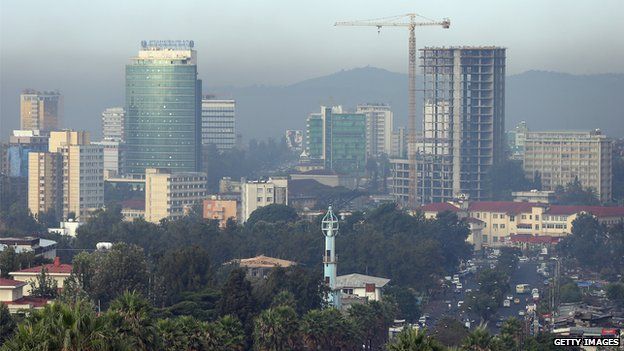
The capital Addis Ababa is expanding rapidly at a time of economic growth
But ruling party spokesman Desta Tesfaw dismissed the allegations and accused opposition groups of trying to discredit the elections, saying: "They don't have their own policies and agendas, and that's clear to the Ethiopian people."

Which outsiders are monitoring the polls?

The African Union has sent election monitors, but the European Union won't be sending observers. The EU said it hasn't been invited.
BBC

Thursday, May 14, 2015

Authoritarian Ethiopian Regime Cadres Force People to Cast Open Ballots in Advance of Election

 The Ethiopian National Election is on May 24, 2015, less than two weeks away, but the authoritarian regime, under the control of the Ethiopian Peoples’ Revolutionary Democratic Front (EPRDF) for the last 23 years, appears to be panicking. The political mood of the Ethiopian people is feistier than ever as they see the election to be a totally controlled process, hardly worthy of their participation. Yet, even despite the scrupulous closing down of all political space, the EPRDF is obviously still scared and has come up with a new plan to further protect themselves from the vote of the people, even while pretending otherwise.Obang Metho, Executive Director SMNE
Regime cadres, all on salary, have been organized so that one cadre is responsible to ensure five people fall into line with the goals of the EPRDF. These cadres have been going to the homes of those people assigned to them with election ballots for the May 24th election. The people are told they must immediately cast their ballots and to stay home on Election Day. Reportedly, the ballots are not secret, but are collected by these agents who also write down their names. Anyone who refuses to cast their ballot or who tries to vote on Election Day will face serious consequences like the loss of jobs, opportunities, or other benefits. Some are threatened with punitive actions, which in this country might mean arrests, beatings or other abuse. With the full authority of the regime behind them, they are able to harass and intimidate these persons in order to achieve full compliance.
This is the first election since the death of the former Prime Minister Meles Zenawi and the atmosphere of discontent in the country is greater than ever. Since the 2005 election, where some limited space was allowed for the opposition, the EPRDF has increasingly tightened the political space. In 2010, the EPRDF clamped down on nearly all political space to opponents and according to documentation by Human Rights Watch, used humanitarian aid as a means to manipulate votes. The unpopular EPRDF then claimed an absurd 99.6% electoral victory, giving only one opposition member a place in the 547-member parliament. However, in 2015, the EPRDF has restricted the playing field even more. If one thought of it as a soccer field; there would be only one ball, one net and one team—their own. No other team would be on the field and now, even the spectators would have to stand outside. It is obvious that Ethiopia has become one of the most repressive regimes in Africa; however, beyond that, it may be the most egregious example of an ethnic-apartheid regime on the continent—possibly worse than South Africa.
The four ethnic-based parties that make up the EPRDF fail to represent the over eighty or more ethnic groups in the country; yet, even those in three of the four parties are puppets of the one controlling group of the Tigrayan Peoples Democratic Front (TPLF). Going even further, the TPLF does not represent many of their own people who object to its actions. It is a system built on patronage. In order to gain and maintain power, the TPLF has built an entrenched system of gifting regime loyalists from every ethnicity; but especially endowing its own region with perks as a means of entrapping them and making them complicit in supporting the regime. However, only those with connections to the Tigrayan Central Committee are assured the benefits. These are the people who dominate all key positions throughout every sector of society and who have greatly profited from this association. If the TPLF loses the election, this power group fears losing everything they have gained through years of brazenly seizing the power and assets of the country with impunity.
Words like democracy, elections, and the rule of law are used to cloak the truth. Actions in the light are only meant for public display while what happens in the shadows undermines all else. For example, the TPLF/EPRDF is a regime that espouses the values of a robust civil society; yet, they passed a law, the Charities and Societies Proclamation (CSO), which has totally silenced any independent civil society voices within Ethiopia. In their place, government-controlled institutions have taken the place of the previous ones, working in concert with the goals of the TPLF/EPRDF. For example, efforts to advance such things as women’s empowerment, human rights, reconciliation, justice and electoral rights, have been criminalized if an organization receives more than 10% of their funds from foreign sources. Over 2,600 organizations closed as a result. Another example is an anti-terrorism law that has been used to silence political dissent. In the light, it pretends to be working to protect the people against terrorism, but in the dark it has resulted in the imprisonment or exile of human rights bloggers, journalists, political activists, religious leaders or any others who speak out.
Now, there is a national election scheduled that is merely for show. Wendy Sherman, the U.S. State Department Undersecretary, is the only one calling it a free, fair and credible election. She is the only one figuratively selling tickets to a political game where there are no seats left for anyone but the TPLF. All the groundwork has been laid months ago to ensure there is no competition.
As we described in a February 2015 press release http://www.solidaritymovement.org/downloads/150116-Ethiopians-Boycott-Fake-Election.pdf by the Solidarity Movement for a New Ethiopia (SMNE), the TPLF/EPRDF has taken many steps to make sure there are no viable opposition groups running against them. Instead, they have manipulated the process all along the way so as to deny any entry. This has included intimidating and arresting political leaders and hijacking at least one organization from its leadership—Unity for Democracy and Justice (UDJ)—by replacing the legitimate leaders with their own regime cadres. Now they, under the guise of UDJ, will compete against themselves so they can win either way. Yet, even though they have successfully closed off all political space, they still are afraid of the people.
Now they are sending their agents door-to-door to urge people to cast their ballots right there, warning them that now that they have voted, the TPLF/EPRDF knows who they are and how they voted. Many will be afraid to cast their vote for any other than the TPLF/EPRDF candidates. Those who resist are threatened.
When one tiny section of a political party, like the TPLF, holds complete power over the marketplace of opportunities as well as over the institutions capable of punishing those who fail to yield to its authority, you get a country like today’s Ethiopia and an election like the one coming up this month. Just wait until the TPLF manipulates the political scenery by removing Hailemariam Desalegn, the current prime minister who comes from the south—not from the Tigray region like others in the TPLF—and replaces him with one of their own TPLF cronies. How long can such a regime last when it excludes the vast majority of Ethiopians by ethnicity and corruption? The answer to this question is “not long” for it is unsustainable. It is out of desperation that this new pre-election vote is being forced on the people of Ethiopia.
Interestingly, the recent tragedies affecting Ethiopians abroad have taken on a life of their own, uniting the people around their deep compassion for the many nameless Ethiopians whose ethnicity, religion, and background no longer seem to matter. Diverse Ethiopians have been greatly affected by the death or hardship of these fellow Ethiopians—who were shot or beheaded in Libya for their Christian faith, who were burned alive in South Africa, whose organs were removed in the Sinai Desert, who are unwanted in countries among a flood of other refugees, who have been raped, abused or kept in domestic servitude in the Middle East until some even hung themselves or jumped off a bridge or balcony, or who drowned in the Mediterranean Sea as they posed as Eritreans because so many international authorities discount the totalitarian nature of the TPLF/EPRDF. They left seeking freedom, safety from arrest or abuse, or a better life outside of Ethiopia. Ethiopians grieve for them and their loved ones regardless of their differences.
We are witnessing a change before our eyes. Ethiopians are putting humanity before ethnicity, one of the foundational principles of the SMNE, as never before and it is a threat to the TPLF/EPRDF. When Ethiopians came out to mourn for those who died it turned into a protest against a system that drives so many of our young people from their homeland.
In fact, during the protest some of the younger people, born under the rule of the TPLF/EPRDF, were calling for former Ethiopian President Mengistu Hailemariam, a known brutal dictator, to come back to rule the country; choosing him over the current brutal and corrupt ethnic-apartheid system. Their position was based on the belief that people were more unified under Mengistu and that there had been more equal opportunity regardless of ethnicity. No wonder the TPLF/EPRDF fears what might happen if people came out to vote.
In conclusion, is this the democratic process that Wendy Sherman alluded to a few weeks ago that keeps getting better and better? Is this what a credible election is to the Obama administration? Obama was not elected in this way. If the State Department speaks the language of democracy building, should they not be outraged by what is happening in Ethiopia? Why is such a double-standard tolerated? Why is no one condemning it? Where are the other donor countries who are the financiers of this regime? Where is their voice? They cannot claim they do not know. We are attaching the voting cards that have been handed over to the people so others can see further evidence of what is happening on the ground. Now, the US, the UK, the EU and others cannot claim they did not know.
We are calling on donor countries to make the TPLF/EPRDF accountable. If donor countries can condemn a corrupt, rigged election process in countries where we have no alliances; but then overlook it in places like Ethiopia where we have national interests, is it not morally wrong? For Ethiopians, it is not only about our own national interests, but it is about the survival of our people and about our future.
The greatest responsibility for change in Ethiopia lies on the shoulders of the people of Ethiopia. For us, whether or not the outsider comes to our aid, we cannot determine, but with God’s help and in keeping with His sovereign will, we Ethiopians will free ourselves. We are not begging for our freedom to be handed over like foreign aid. Ethiopians will claim it for themselves. What we are asking is for outsiders not to be a roadblock to our freedom or to our future and to speak out truthfully when harm and immoral actions are committed.
The SMNE was created for the freedom, justice, and overall wellbeing of the Ethiopian people, but even if there was opportunity for a change of government or leadership, it would not be enough. During the domination by the TPLF/EPRDF, the people of Ethiopia have been encouraged towards division, hate, violence and self-interest. Without change in the hearts and minds of the people of Ethiopia, we will be stuck in a self-defeating pattern. If we are to become a healthy, well-functioning society of diverse people, we must put humanity before ethnicity and care about the freedom, justice and well being of others like we care about our own for no one is free until all are free. This goes beyond our borders to our neighbors close and far in this global society.
Right now, the TPLF/EPRDF is not free. They are consumed with their personal survival and it is becoming increasingly more difficult for them to live in their self-made prison. We must find a way as a society to re-engage as people. The apparatus of the TPLF/EPRDF political collective includes millions of regime collaborators who have chosen to buy into the system rather than to stand up against it; however, that loyalty is not deep, but can quickly change. Right now, only a few are thriving while the majority struggles to survive.
Let us strive to be people who will not collaborate with what is to the detriment of others. Let us not take advantage of our own people, but instead, let us help contribute to the creation of a government of the people, by the people and for the well being of all the people. May God give courage to Ethiopians to stand up for what is right, good, and wise for our future together.
For more information, contact Mr. Obang Metho, Executive Director of the SMNE. Email: Obang@solidaritymovement.org

Wednesday, April 22, 2015

Protest held in Ethiopia over killings by Islamic extremists


11Unidentified relatives and friends mourn for the Ethiopians who were were held captive in Libya and killed by the Islamic State group, in the poor Cherkos Village neighborhood of Addis Ababa, Ethiopia Monday, April 20, 2015. Many in Ethiopia are reeling from the news that several Ethiopians were killed in Libya by the Islamic State group, which over the weekend released a video purporting to show the killings that has shocked many in the predominantly Christian country where some on Monday gathered in an Addis Ababa slum to mourn two former residents whose faces were recognized in the Islamic State video.
addis demo 8 addis demo 7 addis demo 6 addis demo 5 addis demo 3 addis demo 2 addis demo 1 addis ababa cherkos cherkos addis ababa

Thursday, April 2, 2015

ኢንጂንየር ይልቃል ጌትነት እንዳይወጡ ታገዱ

ኢንጂንየር ይልቃል ጌትነት እንዳይወጡ ታገዱ
በኢትዮጵያ ዋነኛ የሚባለው ተቃዋሚ የሰማያዊ ፓርቲ ሊቀመንበር ኢንጂንየር ይልቃል ጌትነት በአሜሪካ የሚኖሩ የፓርቲውን ደጋፊዎች ለማግኘት እንዳይጓዙ ዛሬ ምሽት በድጋሚ ከቦሌ አለም አቀፍ አየር ማረፊያ ታገዱ።
በእልህና በቁጭት በተለያዩ ሃገራት የሚገኙ ኢትዮጵያውያን ሰማያዊ ፓርቲን ለመደገፍ የሚያደጉት አስተዋጽዎ ከመቸም በላይ እንደሚሆን አገዛዙ ተገንዝቧል። ትግሉ ይቀጥላል !!!

Tuesday, March 24, 2015

Egypt, Ethiopia and Sudan sign accord over Nile waters

KHARTOUM, Sudan (AP) — Egypt, Ethiopia and Sudan on Monday signed an initial agreement on sharing water from the Nile River that runs through the three countries, as Addis Ababa presses ahead with its construction of a massive new dam it hopes will help alleviate the country's power shortages.

The dam had been an issue of contention among the three countries, with Egypt concerned it would reduce its share of the Nile established under a colonial-era agreement that gave Egypt and Sudan the main rights to exploit the river's water.
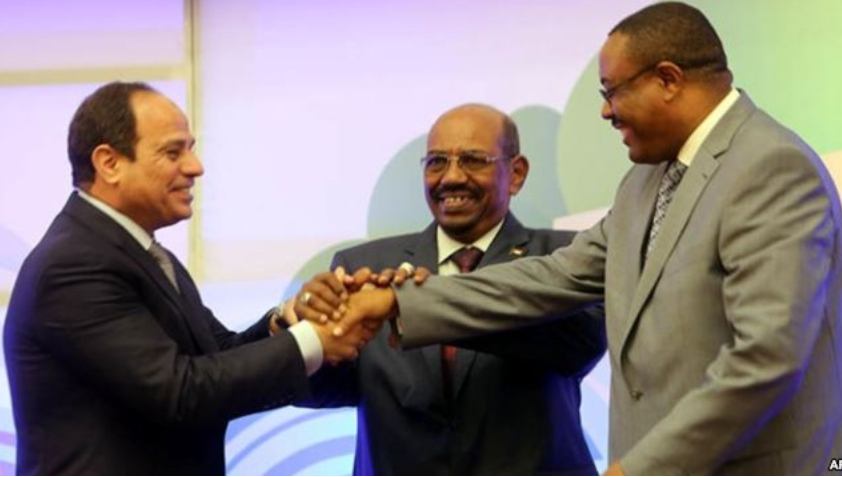
But on Monday, leaders of the three nations — Egyptian President Abdel-Fattah el-Sissi, Sudanese President Omar Bashir and Ethiopian Prime Minister Hailemariam Desalegn — welcomed the agreement in speeches in Khartoum's Republican Palace, linking hands and smiling at a signing ceremony.
"While you are working for the development of your people, keep in mind the Egyptian people, for whom the Nile is not only a source of water, but a source of life," el-Sissi said, addressing his Ethiopian counterpart after the three watched a short film about the Grand Renaissance Dam highlighting how it could benefit the region.
Cairo previously had voiced fears that Ethiopia's $4.2 billion hydro-electric project, announced in 2011, would diminish its share of the Nile, which provides almost all of the desert nation's water needs, especially under previous governments.
The agreement, hashed out by officials from the three countries weeks beforehand in Khartoum, outlines principles by which they will cooperate to use the water fairly and resolve any potential disputes peacefully, leaving details on specific procedures to be determined later after the release of joint, expert studies.

Sunday, March 22, 2015

Statement of the Oromo Democratic Front on the Recent Visit of its delegation to Addis

A senior delegation of the Oromo Democratic Front (ODF) was dispatched to Finefinne (Addis Ababa) on March 18, 20015 to kick-start stalled peace talks with the Ethiopian government. Regrettably, despite verbal overtures, no face-to-face talks could be held. Hence, our delegates had to return prematurely to Europe on the 22nd of March 2015. After two years of relentless efforts to engage the Ethiopian government from outside, the ODF took the unilateral action ofsending a high-level delegation led by its President, Mr. Leenco Lata. The delegation arrived in Addis on 19 March 2015
The Oromo Democratic Front (ODF) decided from its inception to pursue the path of peaceful political struggle to defend the rights of the Oromo people and secure freedom, democracy, and prosperity for all peoples in Ethiopia. Accordingly, basing itself in the country and establishing itself among its constituents at home, and registering and legalizingit as a political party able to play its part in the country’s democratization has been and continues to be ODF’s highest priority. To this principled end, we have been trying to engage all political actors in Ethiopia including the ruling party and the government. But, despite out best efforts, negotiations with the government to resolve outstanding issues and facilitate our re-entry into the political process could not commence in earnest.
This incident does not mark the end of the road but rather only the start of our efforts to ground our organization among our people in our country. Acutely realizing that the road of peace is long, treacherous, and complicated and paved with innumerable obstacles, we are determined more than ever before to stay the course. Accordingly, we would relentlessly continue with our efforts to engage all political actors in our country, in order to establish a just and genuinely democratic order and a sustainable and equitable development in Ethiopia.
Ethiopia is once again at a crossroads. Preventing a relapse and moving the country along the road of peace, democracy, and sustainable development requires political will, especially on the part of the ruling party. Reaffirming our unwavering commitment for peaceful and democratic transformation, we therefore call upon all actors, the ruling party in particular, and its supporters in the international community to respond to our efforts positively and support the just demands of our peoples to live in freedom and dignity in their country.
Freedom and Justice for All!
The Executive Committee
Oromo Democratic Front
22/03/2015